
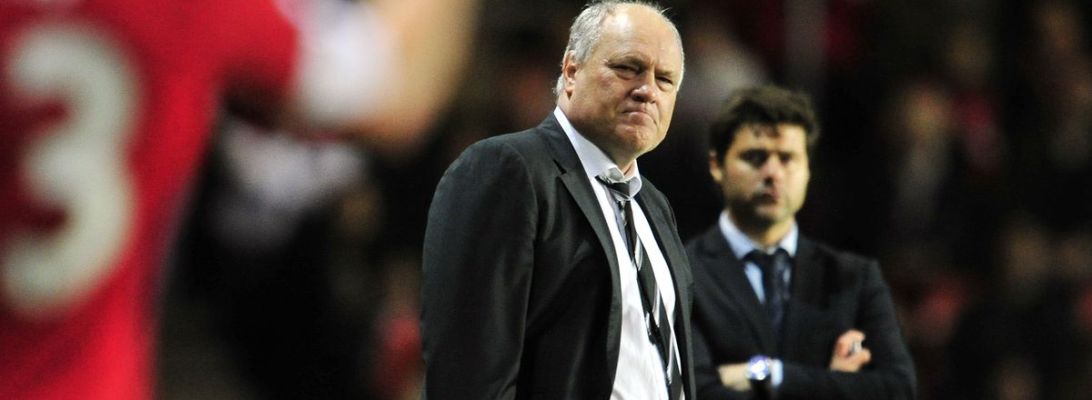
Tottenham Hotspur have become one of the feel good stories of the last ten years in the Premier League, transitioning from a punchline to a potential powerhouse of English football.
Mauricio Pochettino has taken The Lilywhites from sixth placed finishes to four consecutive top four finishes, a Champions League final, a League Cup final as well as three domestic semi-finals in just five seasons. The outstanding management of Mauricio Pochettino coinciding with the move to a brand new stadium with a capacity of over 62,000 has cemented Spurs’ place as one of the big sides in the country.
However, rewind 18 years and Tottenham Hotspur were an unrecognisable club. A club in significant debt under the stewardship of notorious businessman Alan Sugar, Spurs were a club reminiscent of greater times, consistent mid-table mediocrity was not something to be writing home about for the White Hart Lane faithful, but change was forthcoming.
After two unsuccessful attempts to buy Tottenham Hotspur in 1998 and 2000, ENIC’s Daniel Levy completed the takeover of his boyhood club after growing hostility between fans and hierarchy during the end of Sugar’s tenure made the TV personality’s position untenable.
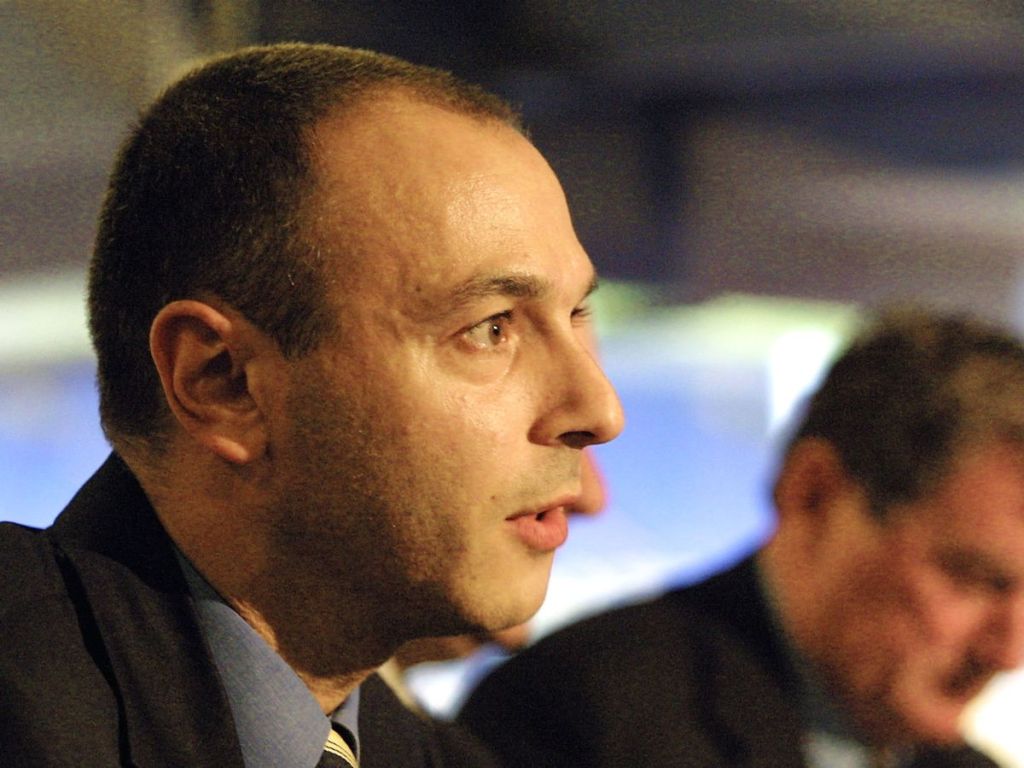
Levy’s first course of action was to appoint Spurs legend and former England manager Glenn Hoddle as first team manager.
Despite good intentions, Spurs began to live up to the reputation of being “Spursy”, with the departure of the infamous Sol Campbell to bitter rivals Arsenal on a free transfer befitting of the club’s then reputation.
After three seasons in the Spurs hot seat, Hoddle was relieved of his duties at White Hart Lane in 2004 after flattering to deceive as the club looked set to embark on a new operating system, with the appointment of Jacques Santini who would work with new sporting director Frank Arnesen who outlined his intentions on building a new look Spurs side with a young talented British core.
New Spurs manager Jacques Santini later brought former Bayern Munich, Coventry and West Brom midfielder Martin Jol to the club as his assistant manager.
The club began their new dawn with the arrivals of a number of exciting British talents, as Andy Reid, Michael Carrick, Michael Dawson and Paul Robinson aligned with the clubs new recruitment policy with added emphasis on homegrown talent.
Despite an impressive and un-Spurs like transfer window, Jacques Santini decided to call it quits just 13 games into his Spurs career. The neglect of talents such as Michael Carrick had led to a somewhat frosty relationship with the n17 faithful as well as a breakdown in personal relationship with technical director Frank Arnesen.
Martin Jol
Martin Jol was handed the task of steering the Spurs ship forward through murky waters.
Things didn’t get easier for Martin Jol, as Frank Arnesen departed the club after flirting with rivals Chelsea for months on end, the clubs eventually settled on a £5 million compensation fee.
Jol guided Spurs to a 9th placed finish during his first season, and set about seeking European Qualification the following season with the additions of Aaron Lennon, Jermaine Jenas and Tom Huddlestone amongst others for his first full season in the Spurs hot seat.
The 2005/2006 season was bittersweet for Jol and Tottenham, with his side recording the club’s highest ever league finish during the Premier League era.

The club narrowly missed out on Champions League qualification on the final day following the lasagna-gate incident which saw Spurs finish below Arsenal.
In spite of the disappointment of the final day, Jol had installed a new found hope at Tottenham; something Spurs had been missing for a very long time. Playing attacking and expansive football whilst nurturing homegrown talent such as Carrick, Defoe, Dawson Huddlestone, Jenas, Keane, Lennon, Robinson etc.
The biggest earmark of the change in the club’s stature was in 2006, when Spurs beat off stiff opposition to sign Dimitar Berbatov from Bayer Leverkusen, who would become an instant hero in North London.
Despite the loss of Michael Carrick to Manchester United at the start of the season, Tottenham enjoyed another great season under new found hero Martin Jol. Finishing 5th in the Premier League again, whilst reaching the quarter finals of the F.A Cup, the League Cup semi-final and the quarter-final of the UEFA Cup where they would controversially fall to Sevilla who were managed by Juande Ramos; a name Spurs fans would become synonymous with in the near future.

Martin Jol began the 2007-2008 season with more impressive transfer business securing the services og highly-coveted youngster Gareth Bale as well as the addition of Darren Bent who would add more firepower to the potent Spurs attack of Berbatov, Keane and Defoe.
Despite three and a half seasons in N17, Martin Jol was controversially relieved of his duties after defeat to Getafe, with news of Jol’s dismissal widespread during the game whilst the Dutchman was unaware of his fate.
A sour ending for Jol, but his legacy at Spurs lives on.
Harry Redknapp
After Jol’s dismissal he was replaced by Juande Ramos, despite the sweet moments of a League Cup triumph in 2008, a 5-1 win over Arsenal and the addition of highly-coveted Luka Modric, Ramos’ tenure wasn’t really one to write home about.
Ramos’ first full season started disastrously, losing star players Dimitar Berbatov and Robbie Keane as well as gathering just two points from his opening eight games.
Harry Redknapp was handed with the task of steering the ship ashore after a rocky start to the season.
Redknapp guided his side to a eighth placed finish as well as to a League Cup final, whilst also bringing back fan favourites Jermaine Defoe and Robbie Keane.
However, the 2009-2010 season was the season where Redknapp made his mark on n17, leading the club to an FA Cup semi-final, a League Cup quarter final but most impressively achieving Champions League qualification recording a fourth placed finish (the club’s highest ever Premier League finish.)
Whilst Redknapp’s reputation was somewhat of an old-school 4-4-2, wheeling-dealing manager, the journeyman manager was changing his ways to further develop the reputation of Tottenham.
The deadline-day acquisition of the mercurial Rafael Van der Vaart from Real Madrid was a sign of the times for Spurs. With Champions League qualification sealed after defeating BSC Young Boys in the play-off round, Redknapp had the perfect platform to display his finest assets on.
Redknapp was packing an impressive side, Van der Vaart settled in superbly and was beginning to take English and European Football by storm, Luka Modric was his usual mouth-watering, silky self and between Crouch, Defoe and Pavlyuchenko Spurs were beginning to make a name for themselves alongside Europe’s elite.
However, there was one man that made the Champions League his own playground, a young man named Gareth Bale.

With Spurs 4-0 down to Inter Milan just 35 minutes and down to 10 men on their biggest European test so far, some Spurs fans would be forgiven for thinking that maybe Champions League football was a stretch too far.
However, a stunning second-half display from Gareth Bale breathed new life into The Lilywhites’ Champions League campaign.
A hat-trick at the San Siro and a dominating display on Inter legends Maicon and Zanetti showed Bale and Spurs’ potential.

The return fixture in the group stage proved to be one of the most iconic nights in the club’s recent European history.
Treble winning Inter Milan rocked up to N17 knowing that a win would all but guarantee top spot in Group A, however a masterclass from Redknapp’s Spurs insured a famous famous nights under the lights of White Hart Lane.
Maicon who was widely considered to be the greatest right back in world football at the time was shown up by Tottenham’s new prodigy Gareth Bale, “Taxi for Maicon” ringed around the Lane as Spurs edged closer to the European glory days that had proved to be so elusive for decades.
Tottenham went on to top Group A and defeated an AC Milan side containing Ibrahimovic, Pirlo, Thiago Silva amongst many other superstar names before being knocked out of the Champions League quarter final.
The 2011-2012 season was another rollercoaster ride for Redknapp’s Spurs, with the club on the fringes of a potential title race for the first time since the 1960’s, injuries alongside off the field problems surrounding Harry Redknapp’s personal life saw the club’s form take a nose-dive towards the end of the season. Spurs finished fourth but due to Chelsea’s Champions League triumph, it meant that the Lilywhites would start the 2012-2013 season in the Europa League instead of the Champions League.
After narrowly avoiding a jail sentence due to tax evasion, Harry Redknapp openly flirted with the England job but was pipped to the post by then West Brom manager Roy Hodgson.
Unhappy at Redknapp’s public disloyalty to the club following club support through troubled times, the Spurs hierarchy decided to part company with Harry Redknapp.
Mauricio Pochettino
Now for the more obvious name on the list, Mauricio Pochettino.
It’s 2014, two seasons after parting company with Harry Redknapp, Spurs have failed to return to the Champions League and the superstar names of Gareth Bale, Luka Modric and Rafael Van der Vaart that had all created fantastic memories on Europe’s biggest stage were now all but a distant bittersweet anecdote for the Tottenham faithful.
After replacing Harry Redknapp, former Chelsea boss Andre Villas-Boas had tried but failed to live up to his potential.
Letting a significant points advantage over Arsenal slip meant that Spurs would again be condemned to Europa League football for another year.
Andre Villas-Boas’ over-reliance on superstar Gareth Bale had seen it’s final days, as the Welshman forced through a move to Real Madrid for £85 million.

The “magnificent seven” followed with AVB spending well over £100 million on seven players to replace Bale’s significant contribution to an inconsistent Spurs side.
The “magnificent seven” proved to be nothing more than a cheesy headline, with Roberto Soldado appearing to leave his shooting boots in Spain, whilst the likes of Capoue, Chiriches and Paulinho failing to settle and Chadli, Eriksen and Lamela still proving to be diamonds in the North London mud. AVB was sacked and then things turned from bad to worse under the stewardship of interim coach Tim Sherwood.
Following an impressive spell at Southampton, Mauricio Pochettino was appointed as Spurs manager.
During his first season, Pochettino placed a large emphasis on youth and incorporated the likes of Nabil Bentaleb, Ryan Mason and Harry Kane in the side ahead of senior players.
Tottenham finished fifth and got to a League Cup final where they were narrowly beaten by Chelsea.
However, the 2015-2016 season was the perfect opportunity for Pochettino to display his credentials. With a clear out of Adebayor, Capoue, Chiriches, Kaboul, Lennon, Paulinho Stambouli and Soldado, the Argentine had a blank canvas to work with, free of any reported trouble makers.
Poch built his new look Spurs with the additions of Alderweireld, Son, Trippier amongst others, with Eric Dier now deployed as an auxiliary defensive midfielder, Vertonghen partnered with his international team-mate, Son supporting a revitalised Harry Kane and the emergence of MK Dons loanee Dele Alli, Spurs were ready to do some damage.

The 2015-2016 season ended in third place for Spurs despite challenging surprise champions Leicester City for the majority of the season, despite a “Spursy” end to the season there was fresh optimism and hope scattered around White Hart Lane.
The incorporation of youth and homegrown talent playing an attacking brand of football, all pulling together in the same direction with a brand new state of the art training ground built to go alongside a new 62,000 seater stadium was a sign of how far the club had come, and how far they can go during Pochettino’s tenure and beyond.
In the final season at White Hart Lane, Spurs finished second to Chelsea, collecting 86 points (club record during Premier League era) whilst gathering 53 points at home from a possible 57.
Ever since Pochettino’s arrival on n17, Spurs have made massive strides of progress. Achieving four consecutive top four finishes in Pochettino’s five seasons as well as reaching the Champions League final shows a change in emphasis and a shift in mentality has saw an overnight transformation of the club that is almost recognisable.
It might be easy for fans to beat Spurs with the trophy-less stick, but over the last 10-15 years has there been a club that has made as much natural progression?
Daniel Levy
Now throughout all of the chaos and quality over the last 18 years, there has been one man that has been a constant throughout; Daniel Levy.
Levy has cut a divisive figure during his tenure in North London. The man who is first to the blame during tough times, and the last for praise during the good.
Levy has become the man that fans love to hate, and hate to love.
The dismissal of Martin Jol halfway through a UEFA Cup game, the attempts to relocate Spurs from North London to East London and into the Olympic Stadium instead of rivals West Ham alongside the lack of support for Spurs fans singing the word “yid” has built up somewhat of a frosty relationship with the supporters.
However, Levy and ENIC have cushioned those blows over the years with the emphasis on building sides with a young hungry British core, the appointments of forward-thinking managers, a brand-new state of the art training ground, a stunning new 62,000+ seater stadium that coincides with the club’s future plans to become one of the elite names in world football.
Spurs fans have become frustrated with Levy at times during his reign for his tight-fisted negotiations. There was a common consensus that had Spurs invested during the 2011-2012 season that they could have won the league. A theory that will remain all but a conspiracy for years to come.
However, Levy’s tight-fisted approach has saved Spurs from some definite flops, there was discontent with Levy when the club failed to sign the likes of Morgan Schneiderlein and Saido Berahino, time has proved to be the greatest healer over these sagas, showing that Levy was correctly placed to miss out on these players.
With Levy at the helm, the club has transformed from mid-table mediocrity to a Champions League regular on the fringes of challenging for the most prestigious title in the English football pyramid.
The transition of Spurs from being a punchline to a powerhouse has been more of a long-term project than some will give credit for, with Levy and Enic beginning to dis-spell the myth of Tottenham’s rigid transfer methods alongside the fantastic man-management of Mauricio Pochettino makes for happy reading with Spurs fans.
Whilst some may say that Spurs have missed the boat in terms of winning the major domestic and European honours, the more optimistic football fans would suggest that incredibly, this could just be the start of Tottenham’s bright future.





 For the love of the game